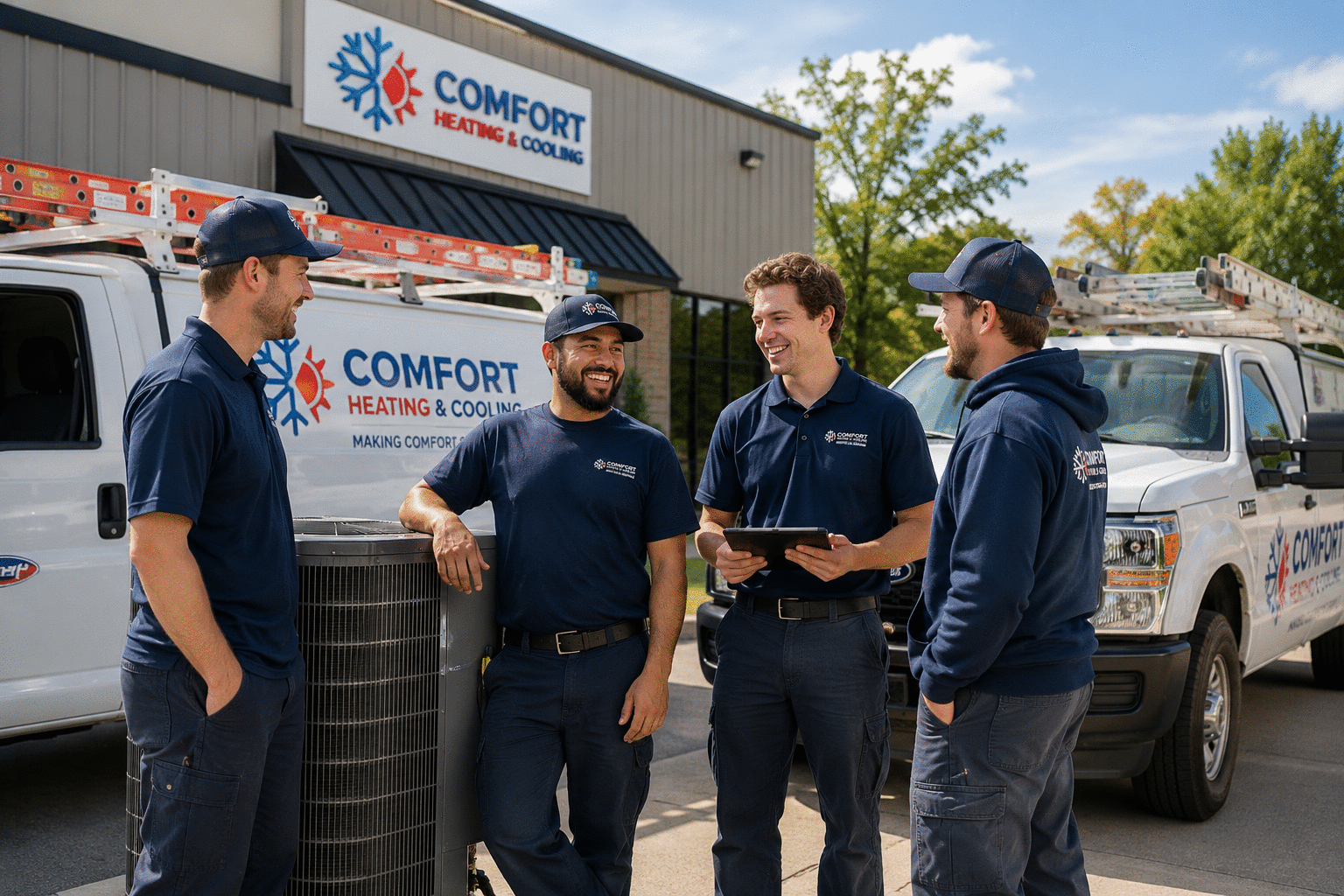
The best teams now run on people and AI together.
AI and automation are real members of your team now. Not a replacement for your people, a force multiplier for them. We help you build hiring and operations systems where the technology handles the busywork and your people do the work only people can do.
Every Hour Your Managers Spend on Bad Applicants
Is an Hour They're Not Leading Your Team.
Franchise operators and service business owners face a hiring paradox. The roles that keep your business running — the front desk, the floor team, the shift leads, the service providers — are the hardest to fill consistently. You post the job, get flooded with unqualified applications, spend hours sorting, play phone tag to schedule interviews, and then half the candidates ghost before they even start.Every hire without a system is a gamble. Misalignment gets in quietly and leaves expensively — financially, culturally, operationally. The businesses winning in 2026 stopped gambling. They built AI-powered engines that bring clarity to every stage, so their managers only ever touch the candidates worth their time.
Hiring hourly teams
should not feel like a gamble.
Businesses that rely on hourly employees are the backbone of our economy — yet finding, hiring, and keeping the right people has never been harder.
Ghosting, high turnover, poor cultural fit… sound familiar?
At AHA Recruiting Experts, we combine AI-powered strategies and human expertise to fix your hiring process where it matters most — at the source.
What a hiring system actually changes
Most operators do not have a recruiting problem so much as a repeatability problem. One location fills a shift lead in nine days; the one down the road takes six weeks for the same role. Nothing in the market explains the gap. The difference is that one manager has a process and the other has a stack of applications and good intentions.
A system starts with definition. Before a job is advertised, the outcomes for the first ninety days are written down in plain language, along with the two or three behaviours that make someone succeed in your environment rather than a generic one. That page becomes the reference for the advertisement, for the interview questions, and for the decision at the end. Without it, every reviewer applies a private idea of what “good” means, and the shortlist is an average of several different jobs.
The second change is speed. Frontline candidates apply to several employers in the same week, and the first employer to reply in a human way usually gets the interview. Acknowledgement, scheduling and reminders are the parts of that exchange no person needs to perform by hand — which is exactly where automation earns its place. What it must not do is make the decision: a manager who cannot explain why a candidate was rejected does not have a system, only a filter.
The third change is evidence. The same questions, asked in the same order, scored immediately on a short scale, turn a set of impressions into something two managers can compare. Structure also makes the process portable: when the manager who normally interviews is on shift, someone else can run the conversation without the quality collapsing.
None of this is exotic, and none of it requires new software on day one. It requires deciding that hiring is a process with owners, steps and numbers — and then keeping the loop closed, so that what you learn from the people who stay is written back into the definition of the role before the next opening goes live.